


Address:South of 18th Floor, New Oriental International Technology Center, 567 Jiangling Road, Binjiang District, Hangzhou City
News
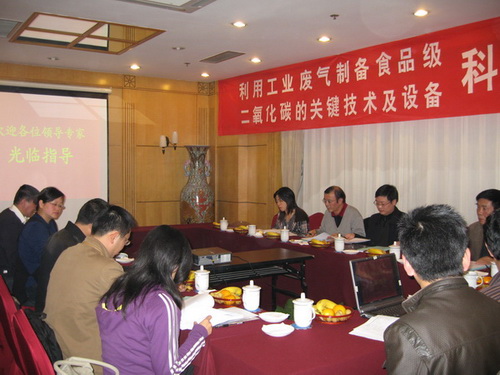
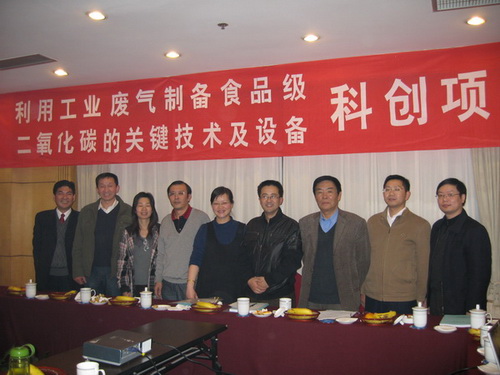
On the evening of November 12, 2008, commissioned by the Management Center of the SME Technology Innovation Fund under the Ministry of Science and Technology, the Hangzhou Municipal Science and Technology Bureau presided over the on-site acceptance meeting for the Innovation Fund project undertaken by our company, titled “Key Technologies and Equipment for the Production of Food-Grade Carbon Dioxide from Industrial Waste Gas (07C26213300479).” Attendees included Shen Yong, Director of the High-Tech Division of the Hangzhou Municipal Science and Technology Bureau; Pan Xuedong, Senior Staff Member; Yang Fan, Deputy Director of the Shangcheng District Science and Technology Bureau; Ma Yuchuan, Section Chief; Professor Li Xi from Zhejiang University; Senior Engineer Xu Jingpan from the Technical Committee of the National Chemical Synthetic Ammonia Design and Technology Center; Associate Professor Liu Huayan from Zhejiang University of Technology; Tu Di, Certified Public Accountant from Hangzhou Yingjie Accounting Firm; and relevant personnel from our company, including General Manager Shen Jianchong, Deputy General Manager Xu Meinan, and Chief Engineer Sun Jianmin. Director Shen of the Municipal Science and Technology Bureau served as the meeting chair, and Professor Li of Zhejiang University served as the head of the expert panel. On the evening of November 12, 2008, entrusted by the Management Center of the SME Technology Innovation Fund under the Ministry of Science and Technology, the Hangzhou Municipal Science and Technology Bureau presided over the on-site acceptance meeting for the innovation fund project undertaken by our company, titled “Key Technologies and Equipment for the Production of Food-Grade Carbon Dioxide from Industrial Waste Gas (07C26213300479).” Attendees included Director Shen Yong and Senior Officer Pan Xuedong from the High-Tech Division of the Hangzhou Municipal Science and Technology Bureau; Deputy Director Yang Fan and Section Chief Ma Yuchuan from the Shangcheng District Science and Technology Bureau; Professor Li Xi from Zhejiang University; Senior Engineer Xu Jingpan from the Technical Committee of the National Chemical Synthetic Ammonia Design and Technology Center; Associate Professor Liu Huayan from Zhejiang University of Technology; Tu Di, Certified Public Accountant from Hangzhou Yingjie Accounting Firm; and relevant personnel from our company, including General Manager Shen Jianchong, Deputy General Manager Xu Meinan, and Chief Engineer Sun Jianmin. Director Shen from the Municipal Science and Technology Bureau served as the meeting chair, and Professor Li from Zhejiang University served as the head of the expert panel.
The project was approved in July 2007 and was completed on schedule after two years of intensive research and development. During the project’s implementation period, invention patents were obtained for the dehydrocarbonization purification process and the refining tower, while a utility model patent was granted for the shallow-low-temperature composite purification tower. The core equipment—the “Food-Grade CO₂ Dehydrocarbonization Tower and Shallow-Temperature Combined Purification Tower”—was approved by the China Petroleum and Chemical Engineering Design Association as a designated product for use in chemical product construction standards. The application scope of this technology has expanded from a single source of waste gas from ammonia synthesis plants to include flue gas from coal-fired power plants, waste gas from ethanol plants, waste gas from petrochemical production units, CO₂ from gas fields, and waste gas from hydrogen peroxide plants. A series of process optimization solutions have been developed for different gas sources. In particular, the technology for producing food-grade carbon dioxide from flue gas in coal-fired power plants was successfully applied for the first time in China, pioneering the recovery of waste gas from domestic coal-fired power plants.
After listening to the company’s deputy general manager’s introduction to the company’s profile and the project’s implementation status, the attending experts conducted a thorough review, inquiry, and evaluation of the project’s execution via on-site assessment, in accordance with the acceptance guidelines for the Technology Innovation Fund for Science and Technology-Based Small and Medium-Sized Enterprises and the indicators specified in the project contract. Following discussion by the expert panel, it was unanimously agreed that our company had achieved excellent results in meeting all indicators during the project execution period (with the expert project score reaching 108 points), thereby meeting the standards for successful acceptance.
Contact Us
Address:South of 18th Floor, New Oriental International Technology Center, 567 Jiangling Road, Binjiang District, Hangzhou City

Phone:+86-571-87177512 87177550 87177513

Email:hangzhoukuaikai@vip.163.com

Fax:0571-87177570
Quick Navigation

Browse the mobile website