


Address:South of 18th Floor, New Oriental International Technology Center, 567 Jiangling Road, Binjiang District, Hangzhou City
Products

Food Hygiene Law of the People's Republic of China
2013-09-18
Chapter I General Provisions Article 1 This Law is enacted to ensure food hygiene, prevent food contamination and the harm caused by harmful factors to the human body, safeguard the health of the people, and enhance their physical fitness.Article 2 The State implements a food hygiene supervision system.Article 3 The health administrative department of the State Council is responsible for the supervision and administration of food hygiene nationwide.
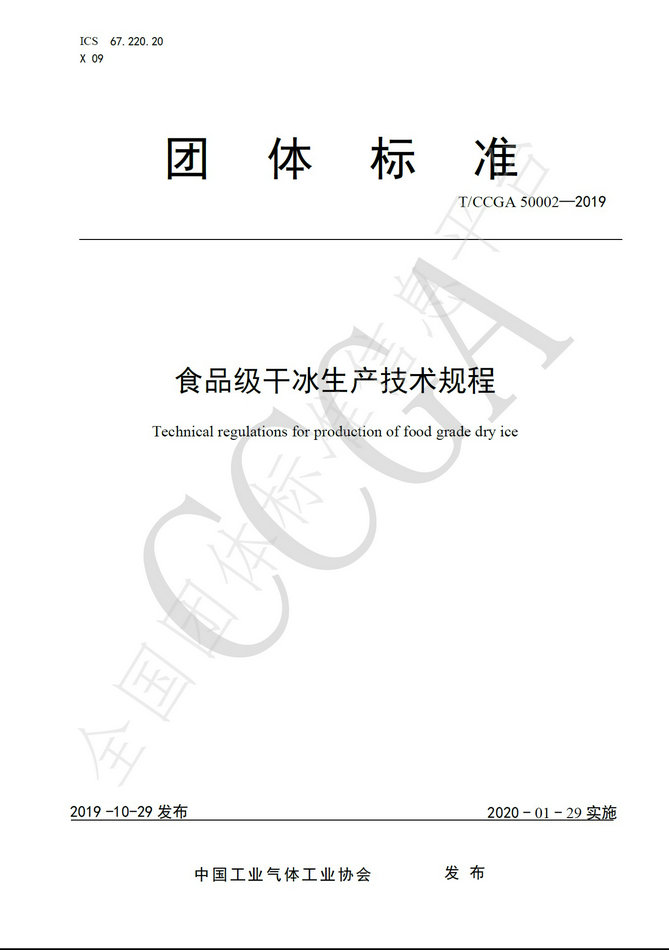
T/CCGA 50002-2019 Technical Specifications for the Production of Food-Grade Dry Ice
2020-03-17
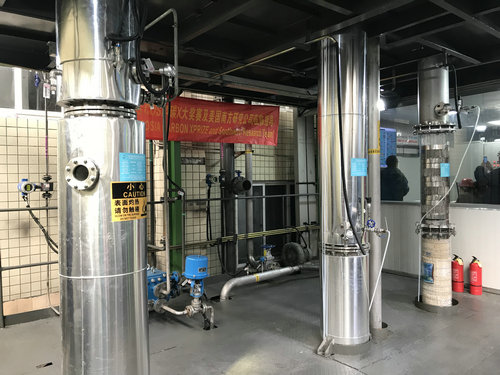
Next-Generation CO₂ Chemical Absorption Technology for Carbon Capture and Purification
2019-12-19
The company is collaborating with Zhejiang University to develop a new generation of chemical absorption technology for CO₂ capture and purification. This technology utilizes a newly developed biphasic absorbent to capture and purify low-concentration CO₂ gas, such as exhaust gases emitted from power plant boilers, steel smelting processes, lime kilns, and cement plants. This project provides a solid technical foundation for the widespread promotion of international Carbon Capture, Utilization, and Storage (CCUS) initiatives. A pilot-scale facility has been established, utilizing the new absorbent, which offers advantages such as high absorption efficiency, low steam consumption, and reduced capital investment.
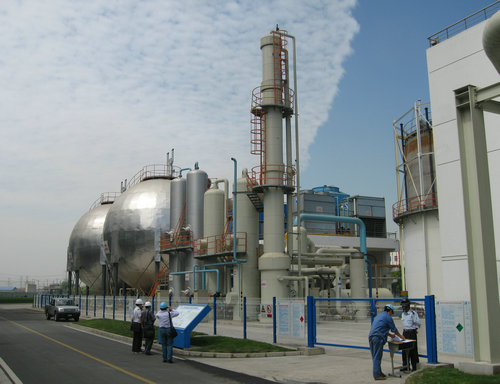
CO₂ Recovery Technology for Low-Concentration CO₂ Emissions from Coal-Fired (or Gas-Fired) Power Plants, Steel Mills, Cement Plants, and Lime Kilns
2023-07-14
Coal- and gas-fired power plants in the power generation sector, steel mills in the steel industry, cement plants and lime kilns in the building materials sector, and the shipping industry are all major sources of carbon dioxide emissions. A common characteristic of the exhaust gases from these facilities is their low CO₂ concentration (8–30%), but they all generate large volumes of exhaust gas. How to control and reduce carbon emissions has become a major constraint on the development of these industries and an urgent issue that needs to be addressed. Coal- and natural gas-fired power plants in the power generation sector, steel mills in the steel industry, cement plants and lime kilns in the building materials sector, and ship engines in the shipping industry are all actively seeking low-energy-consumption, high-efficiency emission reduction solutions.
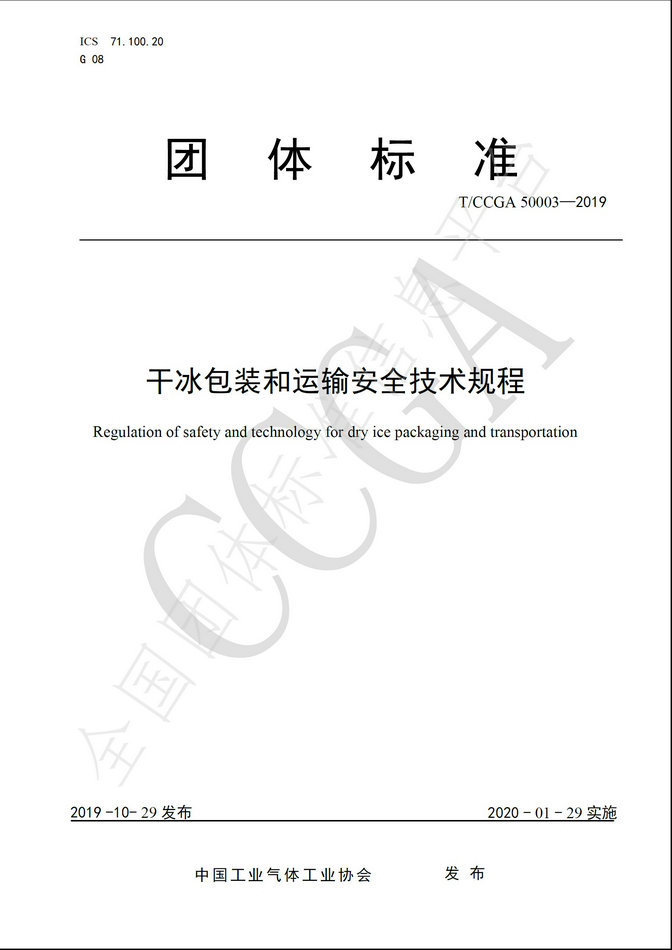
T/CCGA 50003-2019 Technical Specifications for the Safe Packaging and Transportation of Dry Ice
2020-03-17
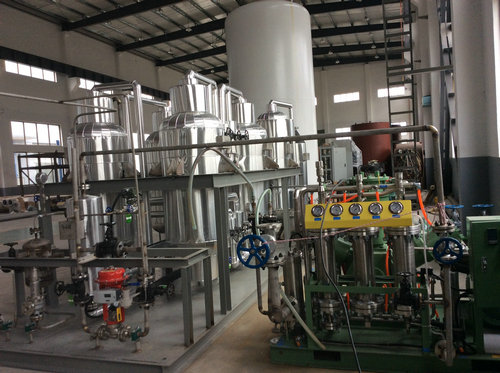
Technology for Producing Food-Grade CO₂ via Fuel Combustion
2019-12-19
Currently, many beverage manufacturers overseas face a severe shortage of CO₂ for beverage production, and securing a reliable supply of raw materials remains a challenge. Our company utilizes carbon-containing feedstocks such as natural gas and diesel to produce CO₂ feedstock gas through combustion. We then employ our proprietary low-partial-pressure absorption process, followed by desorption and purification, to produce food-grade CO₂ products that meet the standards of the International Soft Drink Technology Association (ISBT), Coca-Cola, and PepsiCo. We provide customers with gaseous or liquid CO₂ at a rate of over 50 kg/h. Liquid CO₂ is convenient for storage and export, and we customize the final product form according to customer requirements.
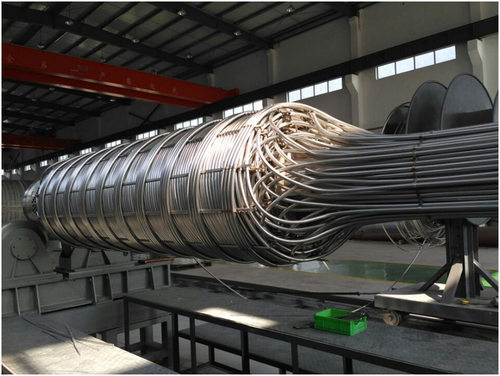
Coil-type High-Efficiency Heat Exchanger
2020-03-10
Spiral-wound heat exchangers offer unparalleled advantages over conventional shell-and-tube heat exchangers, including a wide operating temperature range, resistance to thermal shock, self-relief of thermal stress, and a highly compact design. Their unique construction allows for the full development of the flow field, and there are no flow dead zones. Notably, by configuring multiple tube-side streams (with a single shell-side stream), a single unit can facilitate simultaneous heat exchange for multiple fluid streams.
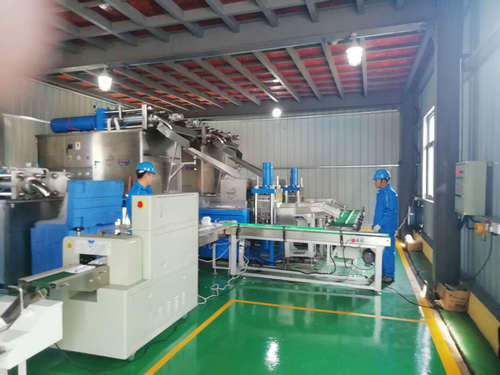
Dry Ice Project: Dry Ice Production and Dry Ice Vapor Recovery
2019-12-19
The company provides comprehensive solutions for food-grade dry ice production. Our dry ice products feature high purity, excellent quality, and meet food-grade standards. We can customize dry ice products in various specifications—including pellets, columns, bricks, and blocks—to meet customer needs. Using our proprietary technology and equipment, dry ice production is cost-effective and highly automated. The gas generated during dry ice production can also be recycled. Through technical processes such as recovery, liquefaction, and separation of the low-temperature CO₂ gas emitted during production, we obtain food-grade liquid CO₂. For every ton of dry ice produced, 1.2 tons of liquid CO₂ can be recovered, reducing the specific consumption of liquid CO₂ in the dry ice manufacturing process and significantly lowering production costs.
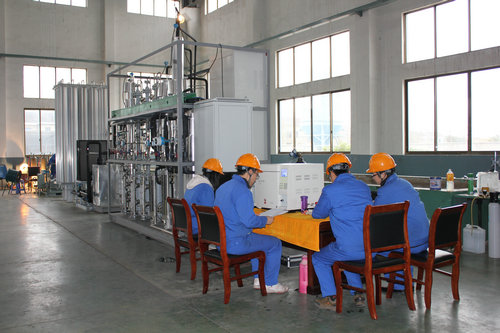
Research and Development of CO₂ Compression and Purification Technology for Oxy-fuel Combustion and Carbon Capture in Coal-Fired Power Plants
2019-12-19
The company possesses proprietary intellectual property rights for a new, highly efficient CO₂ compression and purification technology adapted to the flue gas conditions of oxygen-enriched combustion. As part of the China Shenhua Group’s major scientific and technological innovation project, “R&D and System Integration of Million-Ton-Scale Carbon Capture Technology for Oxygen-Enriched Combustion Coal-Fired Power Plants,” our company is responsible for the sub-project titled “R&D of Key Technologies for CO₂ Compression and Purification in a 200 MW Oxygen-Enriched Combustion Carbon Capture Coal-Fired Power Plant.” This technology compresses and purifies CO₂ from flue gas into liquid CO₂ that meets the requirements for storage or industrial use, while simultaneously removing pollutants such as SO₂, NOₓ, and H₉ from the flue gas. Leveraging its proprietary technical capabilities, the company has established a technological foundation for CO₂ emission reduction through oxy-fuel combustion, providing technical assurance in core processes, system integration, and operational control for the design and construction of 200MW-class oxy-fuel combustion carbon capture demonstration projects.
Research and Development of Low-Carbon Mixed Alcohol Synthesis Technology
2019-12-19
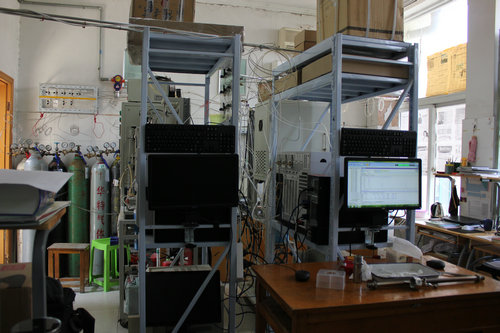
In terms of energy reserves, China is rich in coal but poor in oil, making the efficient utilization of coal resources crucial for ensuring the country’s energy supply. Converting coal into syngas (a mixture of CO and H₂) and then synthesizing alcohol fuels through catalytic processes is a technical approach for effectively utilizing low-grade coal. The low-carbon alcohols produced contain neither aromatic compounds nor sulfur, and can be used as clean liquid fuels and basic chemical feedstocks, offering broad application prospects.
Waste Gas Treatment Technologies for Volatile Organic Compounds (VOCs)
2019-12-19
Organic solvents are widely used in industries such as fine organic synthesis, coating and printing, and petrochemicals. These solvents typically have low boiling points and are highly volatile (known as VOCs, or volatile organic compounds). Production facilities inevitably emit VOC-containing exhaust gases, leading to environmental pollution. Due to the complex composition and wide concentration fluctuations of VOCs in these exhaust gases, treating them presents significant challenges. Furthermore, since VOCs are flammable and explosive, both high and low concentrations can lead to safety hazards such as explosions during gas mixing and combustion.
New High-Efficiency Packing Material
2019-12-19
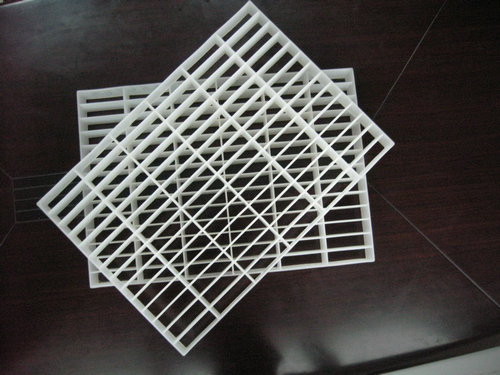
Packing is widely used in industries such as synthetic ammonia production, coal chemical processing, and water treatment for processes including hydrogen sulfide removal from gases, dust removal, and cooling.
Contact Us
Address:South of 18th Floor, New Oriental International Technology Center, 567 Jiangling Road, Binjiang District, Hangzhou City

Phone:+86-571-87177512 87177550 87177513

Email:hangzhoukuaikai@vip.163.com

Fax:0571-87177570
Quick Navigation

Browse the mobile website